

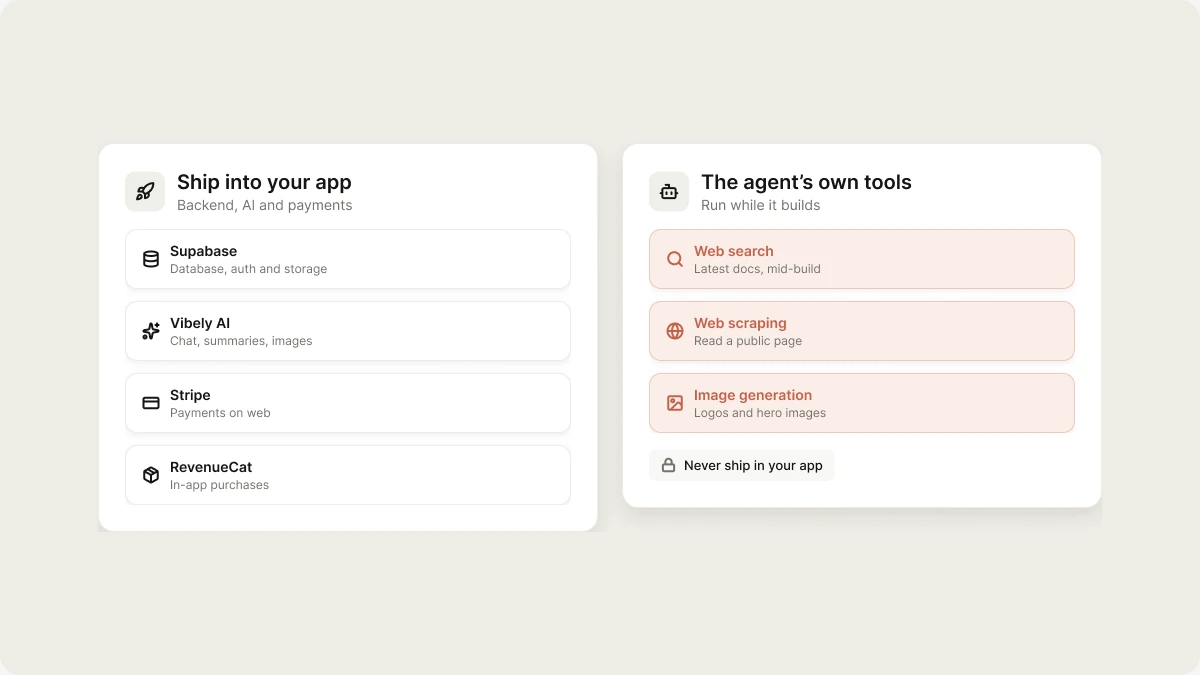
- Supabase, Vibely AI, Stripe, and RevenueCat ship into your app. They are its backend, its AI, and its payments.
- Web search, web scraping, and image generation are the agent’s tools. They run while the agent builds and never become part of your app.
Supabase
Supabase is the backend for every Vibely app: a Postgres database, user authentication, file storage, realtime, and Edge Functions. It is your own Supabase project, in your Supabase account. Vibely doesn’t host a backend of its own. What the agent does once a Supabase project is linked:- Writes SQL migrations for the tables you describe and applies them to your project.
- Turns on row-level security (RLS) for every new table, with policies in the same migration.
- Reads the live schema before writing queries, so code matches what actually exists.
- Writes Supabase Edge Functions for anything that needs a secret, such as webhooks, scheduled jobs, and calls to third-party APIs.
Vibely AI
Vibely AI gives your app AI features, such as chat, summaries, image generation, and classification, without an API key from an AI provider. Usage spends your workspace’s shared credits, the same balance a build uses. Calls run from a Supabase Edge Function, so it needs a linked Supabase project. See Vibely AI.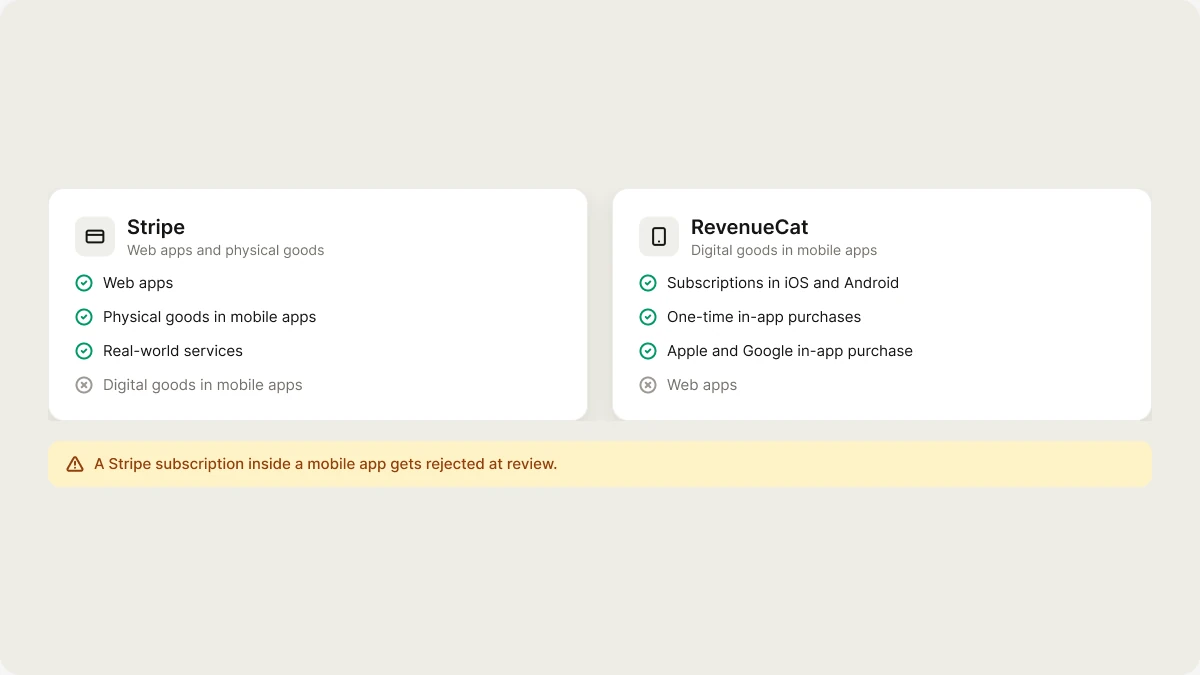
Payments: Stripe and RevenueCat
Two connectors accept money, and they aren’t interchangeable:
The mobile split isn’t a preference. Apple and Google require their own in-app purchase for anything used inside the app, so a Stripe checkout for a subscription in a mobile app gets rejected at review.
Ask for payments in the chat, for example “Add a Pro plan at $19/month with Stripe checkout”. The agent asks you to connect Stripe, then writes the checkout and webhook as Edge Functions that read
STRIPE_SECRET_KEY and STRIPE_WEBHOOK_SECRET. With Supabase linked, your Stripe secret key goes straight into your Supabase project’s Edge Function secrets. See Stripe and RevenueCat.
The agent’s own tools
These tools help the agent while it builds. They run on Vibely’s own provider accounts, so you don’t need keys for them, and they never ship in your app.
If you want any of these inside your published app, for example a search box that queries the web, ask for it. The agent wires the provider you choose behind a Supabase Edge Function and asks for your own key in a secure dialog.